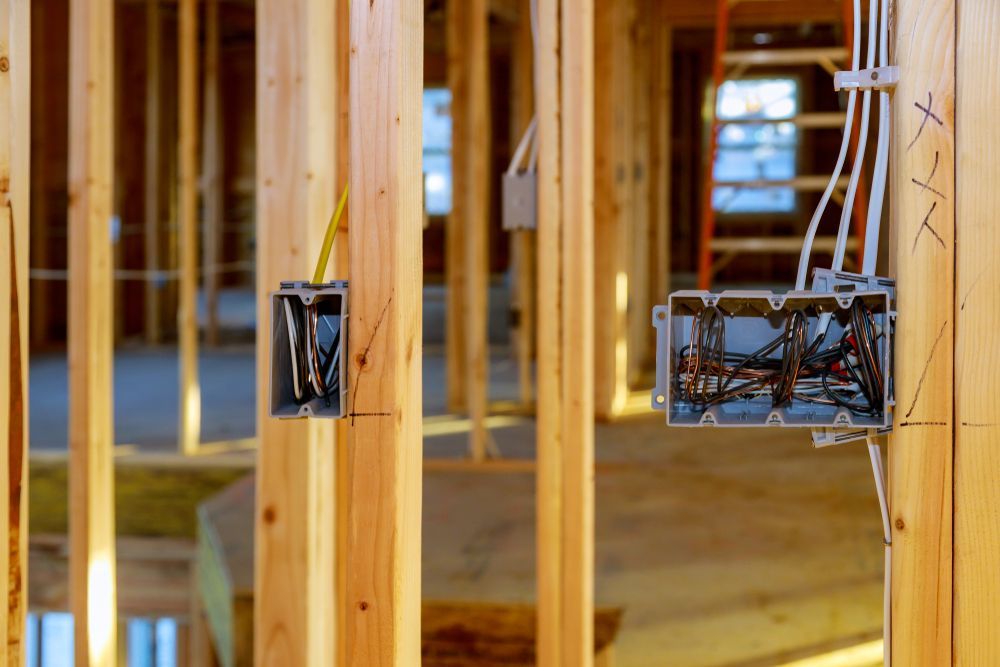

Framing That Supports Your Home Safely
Structural and Framing Repair in Shelby, NC, and Blacksburg, SC for homes affected by termite damage, wood rot, or aging construction
Wood framing holds up everything in your home—floors, walls, roof—but when termites hollow out structural members, moisture causes decay, or decades of settling stress connections beyond their design limits, that hidden damage compromises safety and stability. You typically discover these problems when floors feel soft in certain areas, when walls show cracks that widen seasonally, or during renovations that expose framing members with visible insect tunnels or wood that crumbles when probed. Rize Remodeling and Restoration performs structural and framing repair work throughout Shelby, NC, and Blacksburg, SC that involves removing compromised lumber, reinforcing or rebuilding weakened systems, and restoring the load-bearing capacity necessary for long-term home stability. The work draws on residential construction experience working with both repair projects and new construction, which provides perspective on how framing systems should perform when built correctly.
Repair projects begin with exposing affected framing to determine the extent of damage, then systematically replacing or reinforcing members while temporarily supporting loads above the work area. Floor systems may require new joists or beams, wall repairs often involve replacing studs and headers, and weakened support structures get rebuilt with properly sized lumber and connections that meet current building standards.
Request an inspection to identify framing damage and discuss repair approaches before structural problems affect additional areas of your home.
What Proper Structural Repairs Require
Structural repairs start with careful assessment to distinguish between cosmetic damage and genuine load-bearing failures, followed by engineering the repair to distribute loads correctly once damaged members are removed. The process involves installing temporary supports to hold up floors or roofs during repair work, cutting out damaged sections completely rather than attempting to salvage compromised wood, and fastening new framing with connections designed to transfer loads as the original construction intended. Quality craftsmanship shows in details like proper bearing surfaces, correct fastener schedules, and solid blocking that prevents future movement.
Once framing repairs are finished, floors feel solid without bounce or deflection when you walk across them, walls hold finishes without cracks reappearing, and you no longer notice doors or windows going out of alignment seasonally. The home's structure performs as it should without requiring constant adjustments or accommodations for sagging and movement. Safety improves because load paths function correctly, preventing sudden failures that could occur if damaged framing continued carrying loads it was no longer strong enough to support.
Structural repair includes removing and replacing damaged framing, reinforcing weakened systems, and rebuilding support structures to proper specifications. Surface repairs like drywall replacement, flooring reinstallation, or painting happen after framing work is complete and inspected. If termite or moisture damage extends beyond the immediately visible area, additional investigation may reveal problems requiring expanded repair scope once walls or floors are opened.
Questions Before Starting Your Project
Homeowners facing structural issues often want to understand what the repair process involves, how damage is assessed, and what separates proper repairs from inadequate fixes.
What happens during a structural framing inspection?
The inspection involves exposing suspect framing members by removing finishes, probing wood with an awl to check for soft spots indicating decay, looking for insect evidence like tunnels or frass, and measuring deflection to assess whether members are failing under load.
How do you determine which framing members need replacement versus reinforcement?
Wood that has lost structural integrity from rot or insect damage requires complete replacement, while members that remain sound but undersized for their load can be reinforced by adding sister joists or additional supports.
When should structural repairs be completed instead of delaying the work?
Framing damage worsens as loads continue stressing weakened members, causing failures that affect larger areas of the home and create safety hazards beyond just cosmetic concerns about cracks or uneven floors.
What construction challenges affect framing repair projects in Shelby?
Matching lumber dimensions to older framing often requires milling modern dimensional lumber to actual sizes, accessing crawl spaces or attics for repair work may be constrained by low clearances, and temporarily supporting loads during repairs requires engineering to prevent additional damage.
Why does doing repairs correctly matter more than cutting corners?
Inadequate repairs using undersized lumber, improper connections, or incomplete removal of damaged wood create false security—the framing appears fixed but continues failing gradually, leading to more extensive damage that costs significantly more to correct properly later.
Owner involvement throughout structural repair projects ensures Rize Remodeling and Restoration maintains quality standards rather than rushing work or accepting shortcuts. Contact the company to schedule a detailed assessment of framing concerns in your Greater Charlotte Metro Area home.